
Swing, Dual-Plate, Piston & Axial-Flow Check Valves for Oil & Gas, Petrochemical, Energy and Process Applications.
CHECK VALVES
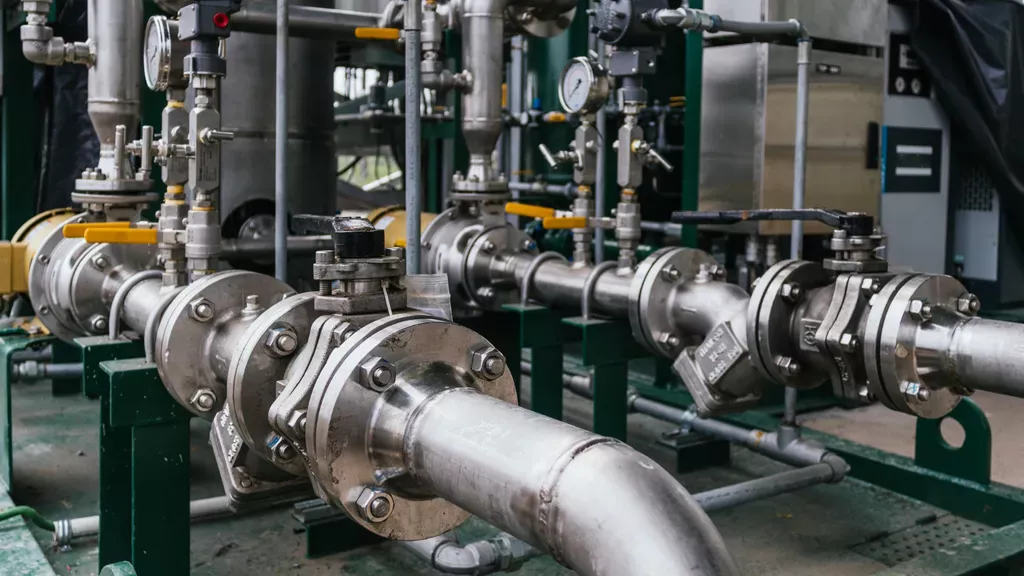
Check Valves for Reliable Reverse-Flow Protection.
Avasi Energy supplies industrial check valves in Sabah and Malaysia, supporting reverse-flow protection requirements across oil & gas, petrochemical, energy and process industries.
Our sourcing scope includes swing, dual-plate, piston/lift and selected axial-flow or non-slam check valve designs, from compact forged valves to project-specific API pipeline requirements.
Each enquiry is reviewed against the specified valve design, size, pressure class, materials, seat construction, end connection, flow conditions, installation orientation, testing and documentation requirements.
Based in Kota Kinabalu, Sabah, Avasi Energy works with suitable manufacturers and supply partners in Malaysia and internationally to coordinate check-valve requirements according to customer datasheets, piping classes and project specifications.
ONE-WAY FLOW. AUTOMATIC PROTECTION.
No Handwheel. No Operator.
A check valve is a self-acting non-return valve.
Forward flow opens the valve.
When flow decreases or reverses, the closure element moves back toward the seat to prevent reverse flow through the piping system.
Check valves are commonly used to help protect:
- Pumps
- Compressors
- Process Equipment
- Meters
- Headers
- Pipelines
- Utility Systems
Unlike most other industrial valves, the check valve does not normally require an operator to command its position.
The process itself determines when it opens and closes.
For a check valve, the key question is not only how it opens — but how quickly and smoothly it closes.
OUR CHECK VALVE RANGE
Different Designs for Different Flow Dynamics.
Swing Check Valves
Proven Non-Return Protection with a Hinged Disc.
A swing check valve uses a hinged disc that moves away from the seat under forward flow and returns toward the seat when the flow decreases or reverses.
When fully open, the disc can move substantially out of the primary flow path, providing relatively low resistance in suitable applications.
Depending on manufacturer design and project requirements, configurations may include:
- Bolted Cover
- Pressure-Seal Cover
- Flanged Ends
- Butt-Weld Ends
- RF / RTJ Connections
- Cast or Forged Construction
- Metal or Soft Seating, where applicable
- Counterweight / Dashpot Arrangements, for specialised designs
Dual-Plate Check Valves
Compact, Short-Travel Non-Return Protection.
Dual-plate check valves use two semicircular plates mounted around a central hinge or shaft.
Forward flow opens the plates, while spring assistance in many designs helps initiate closure as forward velocity falls.
The short plate travel can provide faster closing response than a conventional swing check design.
Depending on project requirements, configurations may include:
- Wafer Type
- Lug Type
- Double-Flanged Type
- Spring-Assisted Closure
- Metal / Resilient Seating
- Various Body & Disc Materials
Dual-plate designs are often considered where compact face-to-face dimensions, weight or faster closure characteristics are important.
Piston / Lift Check Valves
Guided Closure for Compact Piping Applications.
Piston or lift check valves use a closure element that moves along a guided path away from and back toward the valve seat.
Depending on the design, closure may be supported by:
- Gravity
- Process Differential Pressure
- Spring Assistance
These designs are commonly found in selected small-bore, higher-pressure and process piping applications.
Forged steel check valves may be supplied with:
- Socket-Weld Ends
- Threaded Ends
- Butt-Weld Ends
- Flanged Ends
and with:
- Bolted Cover
- Welded Cover
- Pressure-Seal Cover
Axial-Flow / Non-Slam Check Valves
Fast Response for Dynamic Piping Systems.
Axial-flow or selected non-slam check-valve designs use a closure element that travels along or close to the piping axis.
Short travel and spring-assisted designs can enable the valve to begin closing rapidly as forward flow decelerates.
These configurations may be considered for systems where:
- Rapid Flow Reversal Is Possible
- Valve Slam Is a Concern
- Pump or Compressor Protection Is Critical
- System Dynamics Require Faster Closing Response
- Pressure Surge Must Be Considered
The exact performance depends on manufacturer design and system conditions.
WHICH CHECK VALVE?
Closing Behaviour Matters.
| Requirement | Swing | Dual-Plate | Piston/Lift | Axial/Non-Slam |
|---|---|---|---|---|
| Closure movement | Hinged disc | Two short-travel plates | Guided piston/disc | Axial guided closure |
| Typical closing response | Relatively slower | Faster | Fast / design dependent | Fast |
| Installed length | Conventional body | Often compact | Compact | Design dependent |
| Flow resistance | Generally relatively low when fully open | Application dependent | Typically greater than swing | Engineered for specific performance |
| Spring assistance | Optional / design dependent | Common | Common in selected designs | Common |
| Typical selection focus | General non-return duty | Compact / faster closure | Small-bore / process service | Dynamic / anti-slam applications |
There is no universally best check valve.
Selection depends on the actual system behaviour, flow conditions and project specification.
CHECK VALVE SLAM MATTERS.
Closing Too Late Can Create a Problem.
Check-valve slam can occur when reverse flow develops before the valve closure element has fully returned to its seat.
The closure then occurs with higher reverse velocity, potentially creating:
- Impact
- Noise
- Vibration
- Pressure Surge
- Mechanical Stress
- Damage to Valve or Adjacent Equipment
- This is why a check valve should not be selected only according to:
- Size + Pressure Class
- This is why a check valve should not be selected only according to:
The closing dynamics also matter. Relevant factors can include:
- Forward Velocity
- Flow Deceleration
- Pump / Compressor Behaviour
- System Inertia
- Valve Disc Travel
- Spring Characteristics
- Valve Orientation
- Downstream / Upstream System Configuration
A check valve protects against reverse flow. The wrong closing behaviour can create another problem.
CRACKING PRESSURE & MINIMUM FLOW
The Valve Must Open Properly Too.
A check valve requires sufficient differential pressure or flow force to move the closure element away from its seat.
For spring-assisted valves in particular, the required cracking pressure forms part of the valve selection.
At very low flow, an oversized or poorly selected check valve may operate unstably rather than remaining fully open.
Potential consequences can include:
- Disc Flutter
- Repeated Seat Contact
- Noise
- Accelerated Wear
- Unstable Operation
The required operating characteristics should therefore follow the selected manufacturer’s data and the system design.
FLOW VELOCITY MATTERS.
Nominal Pipe Size Does Not Automatically Determine the Right Valve.
A check valve may have the same NPS as the adjoining pipe while still being unsuitable for the actual operating flow conditions.
Selection can depend on:
- Normal Flow
- Minimum Flow
- Maximum Flow
- Fluid Density
- Pressure
- Temperature
- Line Velocity
- System Transients
- Required Closing Response
For critical pump, compressor or surge-sensitive systems, engineering review should therefore consider actual system conditions rather than simply matching pipe size.
The Valve Must Work with the Flow — Not Just Fit the Flanges.
INSTALLATION ORIENTATION
Orientation Can Affect Performance.
Different check-valve designs have different permitted installation orientations.
For example, valve operation may be influenced by:
- Gravity
- Disc / Piston Weight
- Spring Assistance
- Flow Direction
- Hinge Orientation
- Manufacturer Design
Some designs may be suitable for horizontal and vertical installation, while others may require specific orientation or upward-flow conditions.
Installation orientation must follow the selected valve manufacturer’s requirements and project specification.
CAST OR FORGED CHECK VALVES
Construction Should Follow the Service.
Cast Steel Check Valves
Widely used in larger process, oil & gas and energy piping systems.
Materials may include project-specified:
- Carbon Steel
- Low-Temperature Carbon Steel
- Stainless Steel
- Alloy Steel
- Duplex / Super Duplex
- Special Alloys
Forged Steel Check Valves
Often used in compact, small-bore and higher-pressure applications.
Possible material requirements may include:
- ASTM A105
- ASTM A350 LF2
- ASTM A182 Stainless / Alloy Grades
- Duplex / Super Duplex Forgings
Avasi sources the construction and material required by the piping specification.
SEAT & CLOSURE MATERIALS
Body Material Is Only Part of the Valve.
A complete check-valve material requirement may separately identify:
- Body
- Cover
- Disc / Plates / Piston
- Hinge / Shaft
- Spring
- Seat
- Seat Overlay
- Bolting
- Gasket
- Seals
Depending on service, seat construction may involve:
Metal Seating
- For applicable process and temperature requirements.
Soft / Resilient Seating
- For selected tight-shutoff or service requirements where supported by the valve design.
Hard-Faced Seating
- For erosive, high-temperature or demanding services where specified.
Final trim and seat materials should follow the valve datasheet and manufacturer design.
END CONNECTIONS & BODY STYLES
The Valve Must Match the Piping Arrangement.
Check valves may be supplied with:
- Flanged Ends — RF / RTJ
- Butt-Weld Ends
- Socket-Weld Ends
- Threaded Ends
- Wafer Body
- Lug Body
- Double-Flanged Body
- Hub / Special Connections, where specified
API 594 specifically covers check valves in flanged, lug, wafer and butt-welding configurations.
API 594 OR API 6D?
Different Duties. Different Design Standards.
API 594
API 594 covers industrial check valves in flanged, lug, wafer and butt-welding configurations and addresses matters including design, materials, dimensions, ratings, inspection and testing.
It is widely associated with:
- Swing-Type Check Valves
- Dual-Plate / Wafer-Type Check Valves
and other applicable check-valve constructions within its scope.
API 6D
API 6D applies to pipeline and piping valves for petroleum and natural-gas applications and explicitly includes check valves within its scope.
An API 6D check valve may be selected where the pipeline or project specification specifically requires API 6D design and qualification.
The applicable standard should follow the actual project duty and purchase specification.
STANDARDS & SPECIFICATIONS
Different Check Valve Designs Use Different Standards.
Depending on design and application, requirements may involve:
API 594
- Check valves — flanged, lug, wafer and butt-welding.
API 6D
- Pipeline and piping valves, including applicable check valves.
API 602
- Compact gate, globe and check valves through NPS 4 for applicable petroleum and natural-gas applications.
ASME B16.34
- Pressure-temperature ratings, materials, dimensions, NDE, testing and marking for applicable valves.
ASME B16.10
- Face-to-face and end-to-end dimensions where applicable.
API 598
- Valve inspection and testing. API currently lists API 598 11th Edition in its standards plan. American Petroleum Institute
NACE MR0175 / ISO 15156
- Where applicable to H₂S-containing oil and gas service.
The project specification should determine the governing edition.
SPECIAL SERVICE REQUIREMENTS
When General Non-Return Duty Is Not Enough.
Depending on project requirements, Avasi can coordinate check valves for special services involving:
Sour Service
- Material, hardness and documentation requirements for applicable H₂S-containing environments.
Low-Temperature / Cryogenic Service
- Appropriate materials, seals and qualification according to project conditions.
High-Temperature Service
- Suitable body, disc, seat, spring and sealing materials.
Offshore / Marine Environment
- Enhanced materials, coating and project-specific quality requirements.
Abrasive or Erosive Service
- Selected hardened or special seat/trim materials where supported by the manufacturer’s design.
Subsea Application
- Where specialised API 6DSS / subsea valve design and qualification are required.
Hydrogen Service
- API 6D’s current 25th Edition has been supplemented with new requirements addressing hydrogen gas service, including material, testing and fugitive-emission considerations where specified by the purchaser.
All special-service requirements must be supported by the selected manufacturer.
CHECK VALVES & ACTUATION
Normally Self-Acting. Sometimes Assisted.
Unlike Ball, Gate, Globe and Butterfly valves, a conventional check valve normally operates automatically without a separate actuator.
However, selected engineered designs may incorporate features such as:
- Springs
- Counterweights
- Dashpots
- External Damping
- Assisted Closure Systems
These features can modify the valve’s closing response for specific system requirements.
Check valves are normally self-acting, with optional assisted-closing or damping arrangements available on selected manufacturer designs.
TESTING, INSPECTION & DOCUMENTATION
Confidence Beyond the Check Valve.
Depending on valve design, manufacturer capability and project specification, Avasi Energy can coordinate:
Pressure & Leakage Testing
- Shell / Body Pressure Test
- Seat / Closure Leakage Test
- Hydrostatic Testing
- Pneumatic Testing, where specified
- High-Pressure / Special Testing, where required
- API 598 covers pressure-test requirements for multiple industrial valve types including check valves.
Factory Acceptance Test — FAT
- Customer or third-party witnessed testing according to approved procedures and ITPs where required.
Functional / Closing Verification
- Where included within the manufacturer’s procedure or project specification.
Material & Quality Verification
- MTC / MTR
- PMI
- Hardness Testing
- NDE / NDT
- Dimensional Inspection
- Visual Inspection
Third-Party Inspection — TPI
- Customer-approved inspection agencies where required.
PROJECT DOCUMENTATION
The Documentation Travels with the Valve.
Depending on project scope, the valve documentation package may include:
- Valve Datasheet
- Approved GA / Sectional Drawing
- Material Test Certificates — MTC / MTR
- EN 10204 3.1 / 3.2, where specified
- Inspection & Test Plan — ITP
- Pressure / Leakage Test Reports
- FAT Report
- Third-Party Inspection Report
- PMI / NDE Reports
- Spring Data, for applicable designs
- Cracking-Pressure Data, where applicable
- Flow / Cv / Pressure-Loss Information, where supplied by manufacturer
- Certificate of Conformity / Compliance
- Operation & Maintenance Manual
- Recommended Spare Parts List
- Manufacturing Record Book / Data Book
For project valves, technical documentation is part of the supply.
TECHNICAL ENOUGH FOR ENGINEERING. CLEAR ENOUGH FOR PROCUREMENT.
Confidence Beyond the Check Valve.
Engineering teams need to know:
- Will the valve close fast enough?
- Will it create excessive pressure drop?
- Will it operate stably at the expected flow?
- Can it be installed in the intended orientation?
Procurement teams need to know:
- What valve pattern is required?
- What material and class?
- What standard applies?
- What testing and documentation are included?
Avasi Energy coordinates both requirements.
Flow Direction Understood. Closing Behaviour Considered. Supply Documented.
WHAT TO SEND US FOR AN ACCURATE CHECK VALVE RFQ
Help Us Quote the Correct Non-Return Valve.
Basic Valve Information Check Valve Type Swing / Dual Plate / Piston / Lift / Axial / Other Size / NPS Pressure Class / Rating Body Configuration Flanged / Wafer / Lug / BW / SW / Threaded Quantity
Materials
- Body Material
- Disc / Plate / Piston Material
- Seat / Trim Material
- Spring Material, where applicable
- Seal Material, where applicable
Service Conditions
- Process Fluid
- Normal Flow Rate
- Minimum Flow Rate, where available
- Maximum Flow Rate, where available
- Design Pressure
- Operating Pressure
- Design Temperature
- Operating Temperature
Installation
- Horizontal / Vertical Orientation
- Flow Direction
- Space / Face-to-Face Constraints, where relevant
Dynamic Requirements
- Where applicable:
- Non-Slam Requirement
- Cracking Pressure
- Maximum Permitted Pressure Drop
- Pump / Compressor Service
- Surge / Transient Requirement
- Spring-Assisted Closure
- Where applicable:
Special Requirements
- Sour Service
- Low Temperature / Cryogenic
- High Temperature
- Offshore
- Subsea
- Hydrogen Service
- Approved Manufacturer List
Inspection & Documentation
- FAT
- TPI
- MTC / MTR
- PMI / NDT
- ITP
- Test Reports
- MRB / Data Book
- Required Delivery Date
Where available, attach:
- Valve Datasheet
- RFQ
- Material Requisition
- P&ID
- Piping Class
- Project Specification
Swing Check Valve Example
Check Valve, Swing Type, NPS 8, Class 300, RF, Bolted Cover, Carbon Steel Body, Trim as per Datasheet, API 594, Testing & Documentation as per Project Specification.
Dual-Plate Example
Dual-Plate Check Valve, NPS 12, Class 600, Wafer Type, Body and Trim Material as per Datasheet, Spring Assisted, API 594, TPI and MTC 3.1 Required.
Forged Check Valve Example
Forged Steel Check Valve, NPS 1", Class 800, Piston Type, Socket-Weld Ends, ASTM A105 Body, Trim as per Piping Class, API 602, Testing per Project Specification.
API 6D Pipeline Example
Swing Check Valve, NPS 16, Class 600, Full Bore, RTJ / Welded Ends as specified, API 6D, material and seat arrangement as per Valve Datasheet, FAT/TPI and project documentation required.
Examples only. Final descriptions must follow the actual customer datasheet and project specification.
FROM REQUIREMENT TO DELIVERY
A Specification-Driven Valve Supply Process.
- Review
- We review the required valve specification, testing and documentation requirements.
- Manufacturer Selection
- Suitable valve options are identified through our manufacturer and supply network.
- Technical Compliance
- The proposed pipe is reviewed against the agreed technical and commercial scope.
- Actuation, Inspection & Testing
- Where required, actuator integration, FAT, TPI, pressure testing and project inspection requirements are coordinated.
- Documentation & Delivery
- Required documentation, final release and logistics are coordinated through completion of the supply package.
Requirement Reviewed. Valve Sourced. Compliance Documented.
SUPPORTING SABAH’S INDUSTRIAL REQUIREMENTS
Based in Sabah. Connected Beyond Sabah.
Avasi Energy is based in Kota Kinabalu, Sabah, supporting pipe and piping-material requirements for customers, projects and industrial operations in East Malaysia.
Our local presence is supported by access to manufacturers and supply partners in Malaysia and internationally, allowing us to coordinate requirements according to project specifications rather than restricting customers to a single source or product range.
This positioning is increasingly relevant as Sabah’s OGSE ecosystem develops. PETRONAS reported in February 2026 that contracts secured by recognised Sabah-based OGSE vendors had grown substantially since 2021.
We support requirements associated with:
- Oil & Gas
- Petrochemical & Process
- Energy
- Offshore & Onshore Projects
- Maintenance & Shutdowns
- Brownfield Modifications
- Replacement Requirements
Local Presence. Wider Sourcing Capability.
COMPLETE THE FLOW-CONTROL PACKAGE
Need Other Valve Types?
Avasi Energy also supplies:
Ball ValvesFloating, trunnion-mounted and actuated isolation valves.
Gate ValvesIsolation valves for fully open / fully closed service.
Globe ValvesFor throttling, regulation and shut-off duties.
Butterfly ValvesCompact quarter-turn isolation and selected flow-control applications.
Piping ProductsPipes, fittings, flanges, gaskets, bolting, line blanks and Restriction Orifices.
FREQUENTLY ASKED QUESTIONS
What is a check valve used for?
A check valve allows flow in the intended direction and closes automatically when flow falls or reverses, helping prevent reverse flow through piping and equipment.
What is the difference between a swing and dual-plate check valve?
A swing check valve uses a single hinged disc with relatively long travel. A dual-plate valve uses two shorter-travel plates, commonly with spring assistance, and is often more compact and faster closing.
What is a non-slam check valve?
"Non-slam" commonly refers to check-valve designs intended to close rapidly enough to reduce severe reverse velocity and impact during flow reversal. The actual anti-slam performance depends on valve design and system dynamics.
What is check-valve slam?
Valve slam occurs when a check valve closes after significant reverse flow has already developed, causing the closure element to impact the seat with greater force and potentially create noise, vibration or pressure surge.
What is cracking pressure?
Cracking pressure is the differential pressure required to begin opening a spring-loaded or otherwise biased check valve. It depends on the specific valve design.
Can check valves be installed vertically?
Some designs can, while others have orientation limitations. Installation must follow the manufacturer's requirements and the project specification.
What is the difference between API 594 and API 6D check valves?
API 594 addresses industrial flanged, lug, wafer and butt-welding check valves, while API 6D covers pipeline and piping valves — including check valves — for applicable petroleum and natural-gas service.
Can Avasi supply forged check valves?
Yes. Avasi can source compact forged check valves for applicable small-bore requirements according to material, class, connection and project specification.
Can Avasi supply axial or non-slam check valves?
Yes, subject to the required system duty and suitable manufacturer capability.
Can Avasi arrange FAT and TPI?
Yes. FAT, TPI and project-specific testing can be coordinated where required and included within the agreed supply scope.
Does Avasi manufacture check valves?
No. Avasi Energy operates as an industrial valve sourcing and supply partner, working with suitable valve manufacturers according to customer specifications.
Looking for Check Valves?
Send Avasi Energy your valve datasheet, RFQ, material requisition, piping class or project specification.
Whether your requirement involves a conventional swing check valve, compact dual-plate design, forged piston valve, axial-flow non-slam valve or API 6D pipeline check valve, our team will review the requirement and coordinate suitable sourcing options according to the specified technical, inspection, testing, documentation and delivery requirements.
AVASI ENERGY SDN BHD
Piping. Flow Control. Smarter Sourcing.