
Concentric, Double-Offset & Triple-Offset Valves for Oil & Gas, Petrochemical, Energy and Process Applications.
BUTTERFLY VALVES
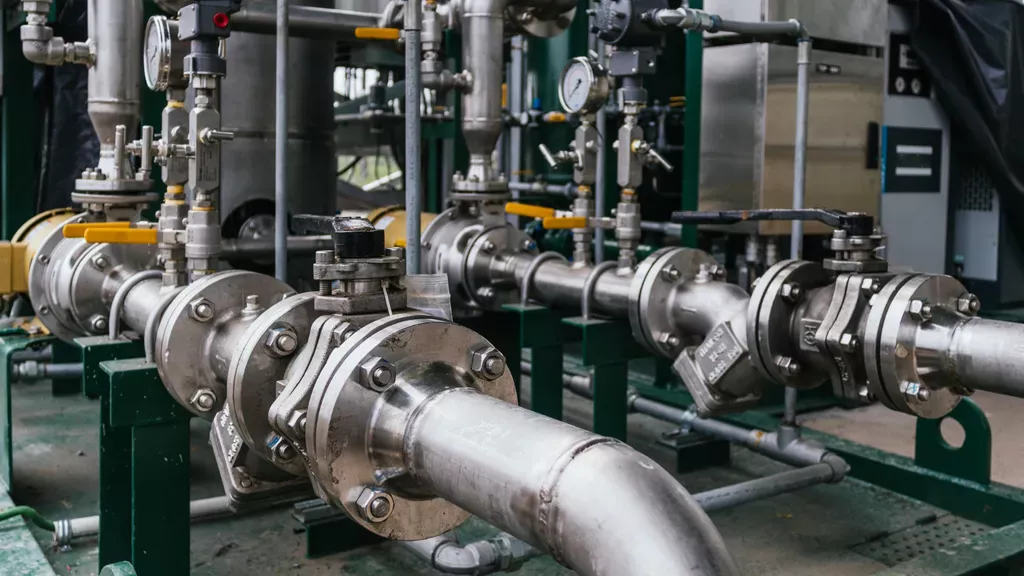
Butterfly Valves for Efficient Flow Control.
Avasi Energy supplies industrial butterfly valves in Sabah and Malaysia, supporting isolation and selected flow-control requirements across oil & gas, petrochemical, energy and process industries.
Our sourcing scope includes concentric resilient-seated, double-offset high-performance and triple-offset butterfly valves, together with wafer, lug, double-flanged and project-specific body configurations.
Manual and actuated packages can be coordinated according to the specified valve design, size, pressure rating, body and disc materials, seat construction, service conditions, shut-off requirements, operation, testing and documentation requirements.
Based in Kota Kinabalu, Sabah, Avasi Energy works with suitable manufacturers, actuator suppliers and supply partners in Malaysia and internationally to coordinate butterfly-valve requirements according to customer datasheets and project specifications.
COMPACT DESIGN. QUARTER-TURN OPERATION.
A Disc That Controls the Flow Path.
A butterfly valve uses a rotating disc positioned within the piping flow path.
A quarter turn rotates the disc between its open and closed positions, making butterfly valves particularly suitable where the application benefits from:
- Compact Installation
- Relatively Low Valve Weight
- Large-Bore Capability
- Fast Quarter-Turn Operation
- Manual or Automated Operation
- Isolation or Selected Regulation Duties
Unlike a full-bore ball valve, the butterfly valve disc remains within the flow path even when fully open.
That affects flow resistance and must be considered when selecting the valve for the application.
Compact does not mean simple. The butterfly-valve design must still match the duty.
OUR BUTTERFLY VALVE RANGE
Three Designs. Different Levels of Service.
Concentric Butterfly Valves
Simple, Resilient-Seated Quarter-Turn Isolation.
In a concentric butterfly valve, the stem or shaft passes through the centreline of the disc, and the disc rotates against a resilient seat or liner.
This construction is widely used in suitable utility and general industrial services.
Depending on manufacturer design and project requirements, configurations may include:
- Wafer Body
- Lug Body
- Double-Flanged Body
- EPDM / NBR / FKM and other specified elastomer seats
- Manual Lever
- Gear Operator
- Pneumatic Actuator
- Electric Actuator
Double-Offset Butterfly Valves
Reduced Seat Wear for Higher-Performance Applications.
A double-offset — or double-eccentric — butterfly valve offsets the shaft from both the valve centreline and the disc/seat sealing geometry.
This allows the disc to move away from the seat relatively early during opening, reducing continuous rubbing between sealing surfaces compared with a conventional concentric design.
Depending on the valve design, double-offset configurations may support:
- Higher Performance Isolation
- Reduced Seat Wear
- Higher Temperature or Pressure Capability
- PTFE / RPTFE-Type Seats
- Metal / Polymer Composite Seat Designs
- Manual or Actuated Operation
The exact rating and service capability remain manufacturer-specific.
Triple-Offset Butterfly Valves
Metal-Seated Performance for Demanding Service.
Triple-offset butterfly valves introduce a third geometric offset into the sealing arrangement.
The geometry allows the disc sealing element to move into its final seating position with reduced sliding contact, making triple-offset designs particularly useful for demanding applications involving metal seats, elevated temperatures or project-specific tight-shutoff requirements.
Depending on manufacturer and project specification, configurations may include:
- Metal-to-Metal Seating
- Laminated Seal Rings
- Wafer
- Lug
- Double-Flanged
- Butt-Weld Construction, where available
- Manual or Actuated Operation
- On-Off or Selected Control Service
CONCENTRIC, DOUBLE-OFFSET OR TRIPLE-OFFSET?
The Geometry Changes the Service Capability.
| Requirement | Concentric | Double Offet | Triple Offet |
|---|---|---|---|
| Shaft / seat geometry | Centreline | Two offsets | Three offsets |
| Typical seat | Resilient | Resilient / PTFE / selected metal | Predominantly metal / engineered sealing |
| Seat contact | Greater sliding/contact | Reduced contact | Designed for minimal rubbing during travel |
| Typical positioning | Utility / general industrial | Higher-performance industrial | Demanding process / higher temp / critical service |
| Shut-off / control | Mainly isolation, selected regulation | Isolation + selected control | Isolation + selected demanding control duties |
| Actuation | Manual or actuated | Manual or actuated | Manual or actuated |
| Selection basis | Fluid, pressure, temp, seat | Duty + pressure/temp + seat | Duty + metallurgy + sealing + project requirement |
Do not label one as simply “better”.
Each offset design exists for a different operating envelope.
WAFER, LUG OR DOUBLE-FLANGED?
Body Style Matters at Installation.
Wafer Butterfly Valves
Compact Installation Between Piping Flanges.
A wafer body is installed between mating line flanges using through-bolting.
It provides a compact and lightweight arrangement.
However, removal generally requires the piping flanges to be separated sufficiently to extract the valve.
Lug Butterfly Valves
Individual Flange Bolting Where the Design Allows.
A lug-type body incorporates bolting lugs around the valve body.
Depending on the exact manufacturer design and rating, a lug butterfly valve may support dead-end service on one side of the line.
That capability should never be assumed simply because the valve has a lug body.
The required dead-end pressure rating must be confirmed with the manufacturer.
Double-Flanged Butterfly Valves
Flanged Connection for Larger or Project-Specific Systems.
Double-flanged valves provide dedicated flange connections on both sides of the valve.
They may be selected for larger sizes, critical installations, buried service or where the piping specification explicitly requires double-flanged construction.
API purchasing guidance specifically asks buyers to state body style, mating flange configuration and whether dead-end service is required.
Wafer, lug and double-flanged are not just visual differences — they affect installation and service.
DISC CLEARANCE MATTERS.
The Valve Must Actually Open Inside the Piping.
When a butterfly valve opens, the disc rotates beyond the body’s narrow face-to-face envelope.
The disc therefore needs sufficient clearance inside the mating piping and flange arrangement.
Potential issues can arise from:
- Small Pipe Internal Diameter
- Heavy-Wall Pipe
- Mating Flange Bore
- Flange Type
- Liners
- Adjacent Fittings
- Pipe Coatings
- Special End Geometry
API’s own butterfly-valve purchasing guidance specifically asks buyers to provide mating-flange details and verify disc clearance with the valve manufacturer.
Provide the piping and mating-flange details — do not assume the disc will clear simply because NPS and Class match.
BIDIRECTIONAL OR UNIDIRECTIONAL SHUTOFF?
Flow Direction Can Matter.
Not every butterfly valve provides identical shut-off performance in both flow directions.
Depending on valve design, project requirements may specify:
- Bidirectional Shut-Off
- or
- Preferred / Unidirectional Flow
The permitted differential pressure can also vary by direction for certain designs.
The enquiry should therefore identify:
- Required Flow Direction
- Required Shut-Off Direction
- Differential Pressure
- Leakage Requirement
API 609 purchasing guidance explicitly identifies unidirectional versus bidirectional flow and pressure shut-off as information the purchaser may need to specify.
Do not assume “butterfly valve” automatically means equal performance in both directions.
RESILIENT, PTFE OR METAL SEAT?
Seat Construction Defines the Operating Envelope.
Resilient Seats
Materials may include project-specified elastomers such as:
- EPDM
- NBR
- FKM / Viton-type materials
- Other engineered elastomers
These are widely used in suitable lower-temperature and utility/process applications. Final compatibility depends on the fluid, temperature and manufacturer formulation.
PTFE / RPTFE-Type Seats
Fluoropolymer-based seating may be selected for suitable chemical or process duties requiring particular chemical compatibility and temperature performance.
Actual pressure and temperature limits remain valve-design specific.
Metal-Seated Designs
Metal seating may be specified for:
- Higher Temperatures
- Fire-Safe Requirements
- Abrasive / Dirty Service
- Severe Process Conditions
- Selected Tight-Shutoff Applications
Modern triple-offset valves use sophisticated metal sealing systems to reduce friction and provide reliable isolation in demanding service.
Seat material must follow the process — not simply what is cheapest or most readily available.
ISOLATION OR CONTROL?
Butterfly Valves Can Do Both — But Not Every Butterfly Valve Is a Control Valve.
Butterfly valves are commonly used for on-off isolation.
Selected designs can also provide useful throttling or modulating performance.
However, a butterfly valve intended for proper control duty may require review of:
- Required Flow Coefficient — Cv
- Valve Opening Range
- Differential Pressure
- Rangeability
- Actuator Sizing
- Positioner
- Control Signal
- Noise / Cavitation Requirements
- Fail Action
BUTTERFLY VALVE OR BALL VALVE?
Two Quarter-Turn Designs. Different Strengths.
Ball Valve
Often selected where the application requires:
- Tight Isolation
- Full-Bore Flow
- Pigging Capability, where appropriately designed
- Higher-Pressure Applications, depending on design
Butterfly Valve
Often attractive where the requirement involves:
- Larger Diameter
- Lower Weight
- Compact Face-to-Face Length
- Reduced Installed Footprint
- Economical Large-Bore Quarter-Turn Operation
The butterfly disc remains in the flow path even when open, unlike the unobstructed bore of a suitable full-bore ball valve.
Ball or butterfly should be selected around the duty, not just price.
BODY, DISC & SHAFT MATERIALS
Complete Metallurgy Matters.
Depending on service and manufacturer design, butterfly valves may be available in material families such as:
Body
- Ductile Iron
- Carbon Steel
- Low-Temperature Carbon Steel
- Stainless Steel
- Duplex / Super Duplex
- Aluminium Bronze
- Nickel / Special Alloys
Disc
- Ductile Iron, for applicable utility applications
- Stainless Steel
- Carbon / Alloy Steel
- Duplex / Super Duplex
- Nickel / Special Alloys
- Coated / Hard-Faced Disc, where specified
Shaft / Stem
- Project-specified stainless, alloy or high-strength materials according to the valve design.
Seat / Seal
- Elastomer
- PTFE / RPTFE
- Metal
- Metal + Graphite
- or other manufacturer-qualified sealing constructions.
Body material alone does not define the complete valve specification.
MANUAL & ACTUATED BUTTERFLY VALVES
Quarter-Turn Operation Makes Automation Practical.
Avasi Energy can coordinate operating arrangements including:
Lever Operation
- Common for suitable smaller valves requiring local manual operation.
Gear Operation
- Often used for larger sizes or where manual torque requires mechanical assistance.
Pneumatic Actuation
- For automated on-off and selected modulating requirements.
Electric Actuation
- For remote operation and plant control systems.
Hydraulic Actuation
- For selected specialist or high-torque applications.
Avasi coordinates actuated butterfly-valve packages through suitable valve manufacturers, actuator suppliers and integration partners according to project requirements.
ACTUATED VALVE PACKAGES
Valve + Actuator + Controls.
Depending on project requirements, an actuated butterfly-valve package may include:
- Butterfly Valve
- Pneumatic / Electric / Hydraulic Actuator
- Mounting Bracket & Coupling
- Solenoid Valve
- Limit Switch Box
- Position Indicator
- Positioner
- Air Filter Regulator
- Speed Controls
- Local Control Station, where specified
- Tubing & Fittings, where specified
- Emergency Shutdown Accessories, where applicable
Actuator sizing should use the selected valve manufacturer’s torque requirements, including relevant differential pressure, seat torque, service conditions, safety factor, fail action and required operating time.
Do not select an actuator solely from valve size.
SPECIAL SERVICE REQUIREMENTS
When Standard Butterfly Valve Supply Is Not Enough.
Depending on project specification, requirements may include:
Fire-Safe Qualification
- Applicable butterfly valves may require fire-tested construction under standards such as:
- API 607
- ISO 10497
- Applicable butterfly valves may require fire-tested construction under standards such as:
Fugitive Emissions
- Quarter-turn valve projects may specify requirements such as:
- API 641
- ISO 15848
- Quarter-turn valve projects may specify requirements such as:
Sour Service
- Where material selection, hardness and documentation must meet applicable H₂S-service requirements.
Cryogenic Service
- May require:
- Extended Stem
- Suitable Low-Temperature Materials
- Project-Specific Seat / Seal Design
- Cryogenic Testing
- May require:
High-Temperature Service
- May require triple-offset / metal-seated designs, suitable body/shaft metallurgy and specialised sealing systems.
Abrasive / Dirty Service
- Where disc, seat and seal design must resist wear or contamination.
Oxygen / Special Gas Service
- May require specialist cleaning, material and qualification requirements.
All special-service claims must be supported by the actual manufacturer’s documentation.
STANDARDS & SPECIFICATIONS
Butterfly Valve Requirements Should Follow the Project Standard.
Depending on design and application, requirements may include:
API 609
- Butterfly Valves: Double-Flanged, Lug- and Wafer-Type
- API published its 10th Edition update in May 2026. The standard addresses design, materials, dimensions, ratings, inspection and testing for applicable butterfly-valve configurations.
ASME B16.34
- Pressure-temperature ratings, materials, NDE, testing and marking for applicable industrial valve construction.
ASME B16.10 / API 609
- Face-to-face dimensions where applicable.
API 598
- Valve inspection and testing.
MSS SP-67
- Resilient-seated butterfly valves where specified.
MSS SP-68
- High-pressure butterfly valves where specified.
EN 593
- Industrial butterfly valves where European standards apply.
ISO 5211
- Actuator mounting interfaces where applicable.
API 607 / ISO 10497
- Fire testing where specified.
API 641 / ISO 15848
- Fugitive-emission qualification where applicable.
NACE MR0175 / ISO 15156
- For applicable H₂S-containing oil & gas service.
The governing edition should follow the customer’s project specification.
API 609 CATEGORY A OR CATEGORY B?
The Standard Recognises Different Butterfly-Valve Classes.
Where the project specification calls for an API 609 valve, the required category should be clearly defined.
API’s butterfly-valve framework distinguishes configurations based on design/rating approach, with Category A historically associated largely with manufacturer-rated concentric designs and Category B with ASME-rated offset/high-performance designs. API’s current licensing forms continue to distinguish Category A and Category B butterfly-valve products.
Avasi Energy follow the category stated in the customer’s datasheet or project specification rather than assuming all API 609 butterfly valves are equivalent.
TESTING, INSPECTION & DOCUMENTATION
Confidence Beyond the Valve.
Depending on design, manufacturer capability and project specification, Avasi Energy can coordinate:
Pressure & Leakage Testing
- Shell / Body Pressure Test
- Seat Leakage Test
- Hydrostatic Testing
- Pneumatic Testing, where specified
- Bidirectional Testing, where required
- Dead-End Test, where applicable to the valve design and project requirement
Functional Testing
- Open / Close Operation
- Valve Stroke Verification
- Actuator Stroke Test
- Position / Limit-Switch Verification
Factory Acceptance Test — FAT
- Customer or third-party witnessed testing according to approved procedures and ITPs.
Material & Quality Verification
- MTC / MTR
- PMI
- Hardness Testing
- NDE / NDT
- Dimensional Inspection
- Visual Inspection
- Third-Party Inspection — TPI
Through customer-approved inspection agencies where required.
PROJECT DOCUMENTATION
The Valve Package Includes More Than Hardware.
Depending on the project requirement, documentation may include:
- Valve Datasheet
- Approved GA / Sectional Drawing
- Material Test Certificates — MTC / MTR
- EN 10204 3.1 / 3.2, where specified
- Inspection & Test Plan — ITP
- Pressure & Seat Leakage Test Reports
- FAT Report
- Third-Party Inspection Report
- PMI / NDE Reports
- Fire-Safe Qualification Documentation
- Fugitive-Emission Qualification Documentation
- Valve Torque Data
- Actuator Sizing Calculation
- Actuator Datasheet
- Accessory Datasheets
- Certificate of Conformity / Compliance
- Operation & Maintenance Manual
- Recommended Spare Parts List
- Manufacturing Record Book / Data Book
For project valves, documentation is part of the supply.
TECHNICAL ENOUGH FOR ENGINEERING. CLEAR ENOUGH FOR PROCUREMENT.
Confidence Beyond the Valve.
Engineering needs to understand:
- Which butterfly design fits the service?
- What seat technology is required?
- Is the valve for isolation or control?
- What direction and shut-off duty apply?
- Will the disc clear the adjoining piping?
Procurement needs to understand:
- What body style is required?
- What material and rating?
- What actuator package?
- What inspection and testing?
- What documentation will be delivered?
Avasi Energy coordinates both sides of that requirement.
Design Understood. Compliance Reviewed. Supply Documented.
WHAT TO SEND US FOR AN ACCURATE BUTTERFLY VALVE RFQ
Help Us Quote the Correct Valve.
Valve Design
- Concentric
- Double Offset / High Performance
- Triple Offset
Basic Information
- Size / NPS / DN
- Pressure Class / PN Rating
- Wafer / Lug / Double-Flanged / Other
- Applicable Standard
- Quantity
Connection Information
- Mating Flange Standard
- Mating Flange Type
- Pipe Schedule / Internal Diameter, where relevant
- Dead-End Service Requirement, if applicable
Materials
- Body Material
- Disc Material
- Shaft Material
- Seat / Seal Material
- Packing Requirement
Service Conditions
- Process Fluid
- Design Pressure
- Operating Pressure
- Design Temperature
- Operating Temperature
- Maximum Differential Pressure
Flow / Shut-Off
- Unidirectional / Bidirectional
- Required Flow Direction
- Seat Leakage Requirement
- Isolation / Modulating Duty
- Required Cv / Control Data, where applicable
Operation
- Lever
- Gear
- Pneumatic Actuator
- Electric Actuator
- Hydraulic Actuator
For Actuated Packages
- On-Off / Modulating
- Fail Open / Fail Close / Fail in Place
- Operating Time
- Power / Instrument Air
- Control Signal
- Solenoid Valve
- Limit Switch
- Positioner
- Local Control Requirement
Special Service
- Fire-Safe
- Fugitive Emissions
- Sour Service
- Cryogenic
- High Temperature
- Offshore
- Abrasive / Dirty Service
Inspection & Documentation
- FAT
- TPI
- MTC / MTR
- PMI / NDT
- ITP
- Testing Requirements
- Documentation / MRB
- Approved Manufacturer List
- Required Delivery Date
Where available, attach:
- Valve Datasheet
- RFQ
- Material Requisition
- P&ID
- Piping Class
- Project Specification
Concentric Example
Butterfly Valve, NPS 8, Class 150, Wafer Type, Concentric Resilient-Seated, Ductile Iron Body, Stainless Steel Disc, EPDM Seat, Gear Operated, testing and documentation as per project specification.
Double-Offset Example
Butterfly Valve, NPS 12, Class 300, Lug Type, Double-Offset High-Performance Design, Carbon Steel Body, Stainless Steel Disc, RPTFE Seat, Gear Operated, API 609, testing as specified.
Triple-Offset Example
Triple-Offset Butterfly Valve, NPS 20, Class 600, Double-Flanged, Metal Seated, Carbon Steel Body, Stainless / Alloy Trim as per Datasheet, API 609, Gear Operated, Fire-Safe and Fugitive-Emission requirements as per project specification.
Actuated Example
Butterfly Valve, NPS 16, Class 150, Lug Type, design and seat as per Datasheet, complete with Pneumatic Actuator, Fail Close, Solenoid Valve, Limit Switch and Positioner, FAT/TPI and project documentation required.
Examples only. Final descriptions must follow the customer’s valve datasheet and project specification.
FROM REQUIREMENT TO DELIVERY
A Specification-Driven Valve Supply Process.
- Review
- We review the required valve specification, testing and documentation requirements.
- Manufacturer Selection
- Suitable valve options are identified through our manufacturer and supply network.
- Technical Compliance
- The proposed pipe is reviewed against the agreed technical and commercial scope.
- Actuation, Inspection & Testing
- Where required, actuator integration, FAT, TPI, pressure testing and project inspection requirements are coordinated.
- Documentation & Delivery
- Required documentation, final release and logistics are coordinated through completion of the supply package.
Requirement Reviewed. Valve Sourced. Compliance Documented.
SUPPORTING SABAH’S INDUSTRIAL REQUIREMENTS
Based in Sabah. Connected Beyond Sabah.
Avasi Energy is based in Kota Kinabalu, Sabah, supporting pipe and piping-material requirements for customers, projects and industrial operations in East Malaysia.
Our local presence is supported by access to manufacturers and supply partners in Malaysia and internationally, allowing us to coordinate requirements according to project specifications rather than restricting customers to a single source or product range.
This positioning is increasingly relevant as Sabah’s OGSE ecosystem develops. PETRONAS reported in February 2026 that contracts secured by recognised Sabah-based OGSE vendors had grown substantially since 2021.
We support requirements associated with:
- Oil & Gas
- Petrochemical & Process
- Energy
- Offshore & Onshore Projects
- Maintenance & Shutdowns
- Brownfield Modifications
- Replacement Requirements
Local Presence. Wider Sourcing Capability.
COMPLETE THE FLOW-CONTROL PACKAGE
Need Other Valve Types?
Avasi Energy also supplies:
Ball ValvesFloating, trunnion-mounted and actuated isolation valves.
Gate ValvesIsolation valves for fully open / fully closed service.
Globe ValvesFor throttling, regulation and shut-off duties.
Check ValvesFor non-return and reverse-flow prevention.
Piping ProductsPipes, fittings, flanges, gaskets, bolting, line blanks and Restriction Orifices.
FREQUENTLY ASKED QUESTIONS
What is a butterfly valve used for?
Butterfly valves are quarter-turn valves commonly used for isolation and, in selected designs, flow regulation. They are especially attractive for larger pipe sizes where compact dimensions and lower weight are important.
What is the difference between concentric and offset butterfly valves?
A concentric valve has the stem/disc arranged around the centreline and commonly uses a resilient seat. Offset designs move the shaft and sealing geometry away from the centreline to reduce seat rubbing and enable higher-performance sealing.
What is a triple-offset butterfly valve?
A triple-offset butterfly valve uses three geometric offsets to create a non-rubbing or reduced-rubbing sealing arrangement, commonly with metallic seating for demanding process applications.
What is the difference between wafer and lug butterfly valves?
A wafer valve is clamped between mating flanges with through-bolts. A lug valve has individual body lugs for flange bolting and may support dead-end service where specifically rated by the manufacturer.
Can every lug butterfly valve be used for dead-end service?
No. Dead-end capability and permitted pressure must be confirmed against the specific manufacturer's valve rating.
What is the difference between a butterfly valve and a ball valve?
Both are quarter-turn designs. Butterfly valves are generally more compact and lighter, especially at larger sizes, while suitable full-bore ball valves provide an unobstructed flow path and may be selected for higher-pressure, pigging or tight-isolation requirements.
Can butterfly valves be used for throttling?
Selected butterfly-valve designs can be used for throttling or modulating control. For proper control duty, Cv, valve position, differential pressure, actuator and control requirements should be reviewed.
What is API 609?
API 609 is the principal API standard covering applicable double-flanged, lug, wafer-type and related butterfly-valve configurations.
Can Avasi supply triple-offset butterfly valves?
Yes. Avasi can source project-specific triple-offset, metal-seated butterfly valves through suitable manufacturers according to size, class, materials, service, testing and documentation requirements.
Can Avasi supply actuated butterfly valves?
Yes. Avasi can coordinate pneumatic, electric, hydraulic and selected specialist actuator packages through suitable manufacturers and integration partners.
Can Avasi arrange FAT and TPI?
Yes. FAT, TPI and project-specific testing can be coordinated where required and included within the agreed supply scope.
Does Avasi manufacture butterfly valves?
No. Avasi Energy operates as an industrial valve sourcing and supply partner, working with suitable manufacturers according to customer specifications.
Looking for Butterfly Valves?
Send Avasi Energy your valve datasheet, RFQ, material requisition, piping class or project specification.
Whether your requirement involves a resilient-seated concentric valve, high-performance double-offset design, metal-seated triple-offset valve or complete actuated package, our team will review the requirement and coordinate suitable sourcing options according to the specified technical, inspection, testing, documentation and delivery requirements.
AVASI ENERGY SDN BHD
Piping. Flow Control. Smarter Sourcing.